Black Friday Starts Now: Why Your Warm Audience Is the Whole Strategy
Would you rather spend Black Friday fighting the biggest retailers in the world for a stranger's attention, or selling to people who already follow you, open your emails, and have been quietly thinking about working with you all year?
I know which one I'd pick. I'd bet you would too.
Yet every year, I see coaches and course creators leave Black Friday until the first week of November, pull an offer together in a rush, and then wonder why their ads cost so much and sold so little. A coach I spoke to last year did exactly this. Their ads went live in Black Friday week, straight to people who'd never heard of them, and they watched their costs climb day after day while sales barely trickled in.
Here's the thing: your Black Friday results are mostly decided before Black Friday arrives. If you're reading this in October, that's good news. You've still got time to get it right.
Black Friday is won before November
I recently heard Andy Franco, a digital marketer with more than 20 years in the industry, put this brilliantly on the Serve Scale Soar podcast. His view: you have eleven months of the year to fill your funnel, and November is when you get to cash in on it.
Black Friday is the one time of year when almost everyone is primed to buy. And they're not only shopping for other people; plenty of them are treating themselves too. That's a huge opportunity, but only if the right people already know who you are.
A Black Friday offer doesn't create demand out of nothing. It gives people who were already interested a reason to stop thinking about it and finally say yes.
And honestly, it's what I'm seeing in ad accounts right now. People need to trust you before they buy. Cold audiences are clicking, but the sales come later, once those same people have warmed up and got to know you. So would you rather that warming up happens now, or in Black Friday week, when every click costs more?
Why chasing new audiences is the expensive mistake
This is where a lot of Black Friday budgets go wrong. During Black Friday week, the big retail brands pour money into Meta ads. They're after the same eyeballs you are, and because ad space is sold through an auction, that pushes costs up for everyone.
So if your plan is to reach brand-new people that week, you're paying premium prices to introduce yourself to strangers who are being bombarded with discounts from every direction. As frustrating as that might be, it's rarely a fight worth picking.
Your warm audience is a completely different story. These are the people who:
are on your email list
have watched your videos or engaged with you on Instagram or Facebook
have visited your website or sales page
have already bought from you
They already know what you do. They don't need convincing that you're worth listening to. They just need a great offer and a reason to act now. So where would you rather your budget went?
Two warm audiences, two different offers
Your warm audience isn't one group. It's at least two, and each needs something slightly different.
People who know you but haven't bought yet. These are your fence-sitters. They've been reading your emails and watching your content, maybe for months. Black Friday is the perfect nudge, because it gives them a genuine reason to act now rather than "someday".
People who've already bought from you. Someone who's bought once is far more likely to buy again. What's the natural next step for them? Make that your Black Friday offer for this group.
One thing I'd gently steer you away from: putting your signature, high-ticket programme on sale. Black Friday tends to work best with your low and mid-ticket offers, or a bundle of them. Protect your flagship for when it launches on its own terms.
Your countdown to 27 November
Black Friday falls on 27 November this year, and Cyber Monday on 30 November. Everything you do between now and then decides who's waiting when your doors open.
I've put together a free Black Friday Launch-Prep Checklist that breaks this into three phases, so you can tick things off as you go.
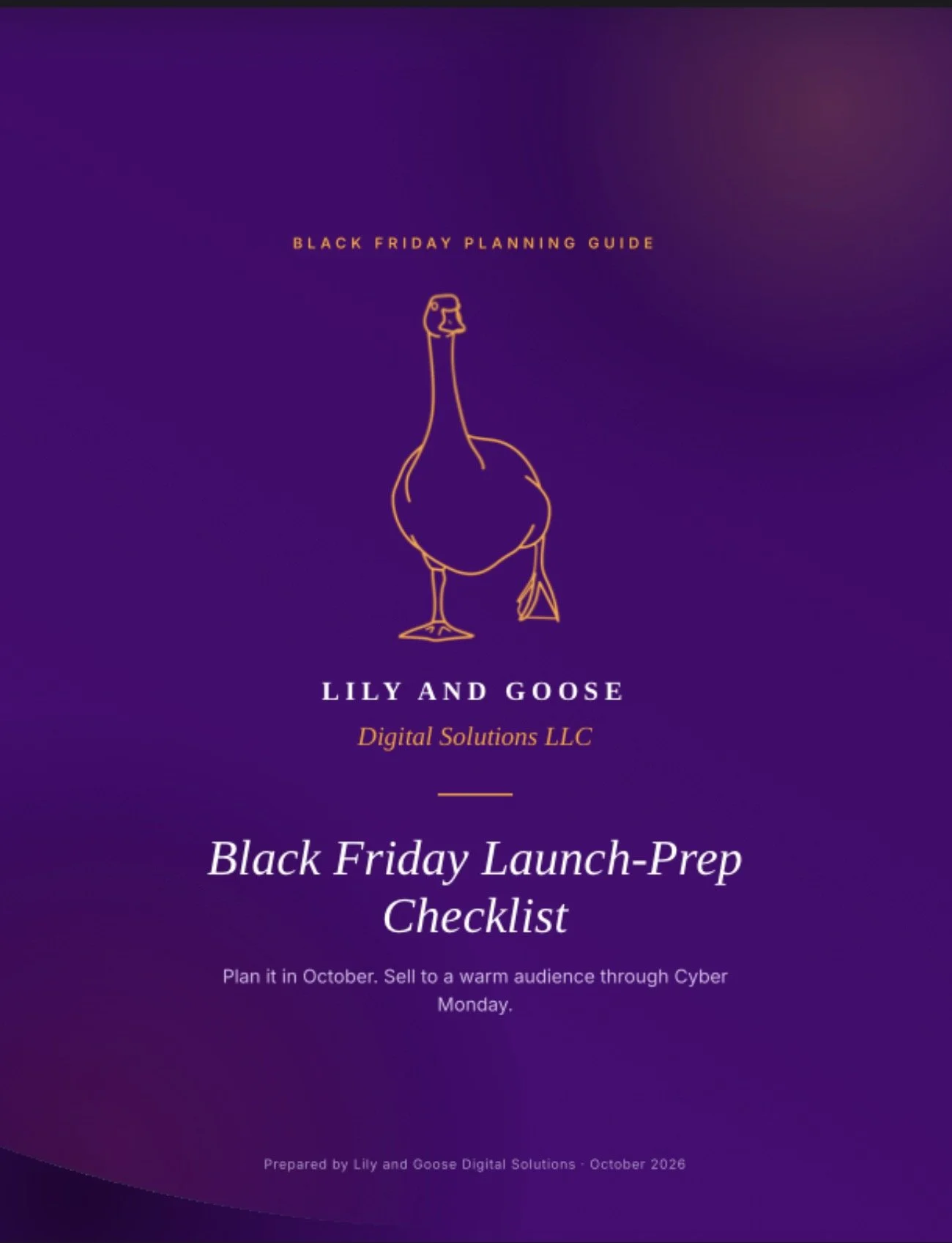
Here's how the three phases play out.
Now, in October: lock in your offer and your plan. Make your decisions now, so November is about doing, not deciding.
Choose one clear offer: an entry-level product, a bundle, or a limited-time bonus (not a deep cut on your flagship)
Say the deal in one line: what they get, what it costs, and when it ends
Decide what it leads into next, such as a coaching offer or your January launch
Set your sale window and a firm end time
Set a revenue goal and an ad budget, expecting costs to run higher than usual that week
Early to mid November: warm up your audience and get set up. Build your warm audience while ad costs are still lower.
Run low-cost video or engagement ads now, before the big brands pile in
Open an early-access or VIP list for the deal
Drop hints about the offer in your content and emails
Check your sales page works on mobile, and that your Meta Pixel and Conversions API are tracking purchases
Write and schedule your sale emails, and get your ads approved a few days before the sale starts
Black Friday to Cyber Monday: sell to your warm, ready audience. Keep it simple and keep it warm.
Email your early-access list first
Put most of your ad spend on warm audiences: engagers, website visitors and your email list
Retarget sales page visitors throughout the sale
Close on time. A firm deadline is what makes the offer work
Check cost per sale daily, then record your results and welcome your new buyers
With my own clients, Black Friday planning starts in October. We decide on the offer, hone the messaging for cold audiences, and check the tracking is working properly before any warm-up ads go live. Then everything for the sale itself is scheduled well in advance, so nobody is scrambling when the doors open.
What if your warm audience is small?
Maybe your email list is a few hundred people, or your Instagram following is still growing. As disappointing as that might feel, it doesn't mean Black Friday isn't for you.
Widen your retargeting window. Instead of the last 30 days of engagers and visitors, look back 90 days, or even 180 if your audience usually takes longer to buy.
Lean harder on email. Your list is the one audience you own outright, and it doesn't get more expensive during Black Friday week.
Set honest expectations. A smaller audience means a smaller result, and that's okay. Every buyer you gain now is someone you can sell to again.
And whatever happens this year, the best time to start building for next Black Friday is the week after this one.
The real payoff is in January
Here's the part most people miss. Black Friday isn't only about the revenue in that one week. Plenty of first purchases barely break even, and that's fine. What you're really building is a list of buyers.
Once someone has bought from you, the hardest step is done. They've experienced how you work, and they're far more likely to buy again. So if you're planning a launch in the new year, every Black Friday buyer walks into it already warm.
Ready to get your warm audience working for you?
Grab the free Black Friday Launch-Prep Checklist and start ticking off Phase 1 this week. Download the checklist
If you'd rather not work through it on your own, I'd love to help. Book a free discovery call and we'll look together at whether your warm audience is ready for Black Friday, and what to do if it isn't yet.
